
Real Estate in Poland 2026: why Poland remains one of Europe's most compelling investment markets
In 2026, Poland is no longer an "emerging" market in the colloquial sense. It is a large economy fully integrated with the European Union that has gone through one of the most consistent transformations in Europe over three decades. For investors from Poland, the United States and Western Europe, real estate in Poland 2026 means not only a lower entry price than in many Western countries, but also access to a stable labour market, developed infrastructure, growing cities and property that still offers income potential.

1. Poland after 30 years of growth: from transition to a major European economy
Over the past three decades, Poland has made an enormous leap forward. In the early 1990s the country was emerging from a centrally planned economy, with underinvested infrastructure, weaker productivity and limited access to capital. Today it is one of the largest economies in the European Union and an important manufacturing, logistics, services and technology market. This growth did not happen by accident. It was built on several parallel processes: privatisation, inflows of foreign investment, EU integration, the rise of entrepreneurship, infrastructure modernisation and a steady increase in workforce skills.
World Bank data illustrate the scale of this change. Poland's GDP measured by purchasing power parity rose from roughly 183 billion international dollars in 1990 to more than 2 trillion international dollars in 2024. GDP per capita in PPP terms increased several times over, from a few thousand international dollars at the start of the transition to more than 50 thousand international dollars in 2024. Behind these numbers lies a real change in quality of life, in the scale of consumption, in the standard of housing, offices, hotels, roads, airports and urban spaces.
What matters most for an investor is that Poland's growth was not confined to a single industry. The country did not build its position solely on cheap labour or one sector. The economy is diversified: manufacturing, exports, logistics, IT, business services, retail, construction, education, advanced manufacturing and real estate all reinforce one another. As a result, the market is more resilient to local shocks than economies dependent on a single branch of industry.
2. Why the Polish economy is still growing in 2026
In 2026, Poland continues to stand out among European countries for its pace of growth. According to the European Commission's forecast, Poland's economy is expected to grow by around 3.5% in 2026, and by about 3.4% according to the IMF's projection. That is clearly stronger than the forecasts for many mature Western European economies. In practice, it means Poland remains a convergence economy: still catching up with wealthier markets, but now from the position of an upper-middle-income economy rather than a low-cost manufacturing base.
Three main forces drive this growth. The first is private consumption. Poland has a large domestic market of nearly 36 million people and a middle class whose incomes and expectations for quality of life have risen over the years. The second is public investment and EU funds, including infrastructure, energy, transport and digital projects. The third is the rising productivity of companies and an increasingly advanced services sector. Poland has become a place where global firms locate not only simple accounting processes, but also IT, cybersecurity, data analytics, R&D, finance, process management and regional competence-centre functions.
From a real estate investor's perspective, this means healthy demand fundamentals. Where employment, wages, the number of specialists and the scale of business all grow, natural demand emerges for apartments, rental units, retail premises, offices, hotels, warehouses and commercial property. Poland is not a risk-free market. It faces demographic challenges, high financing costs, regulatory pressure and periodic supply slowdowns. Yet its fundamentals remain stronger than in many countries in the region.
3. The property market: from housing shortage to a mature investment market
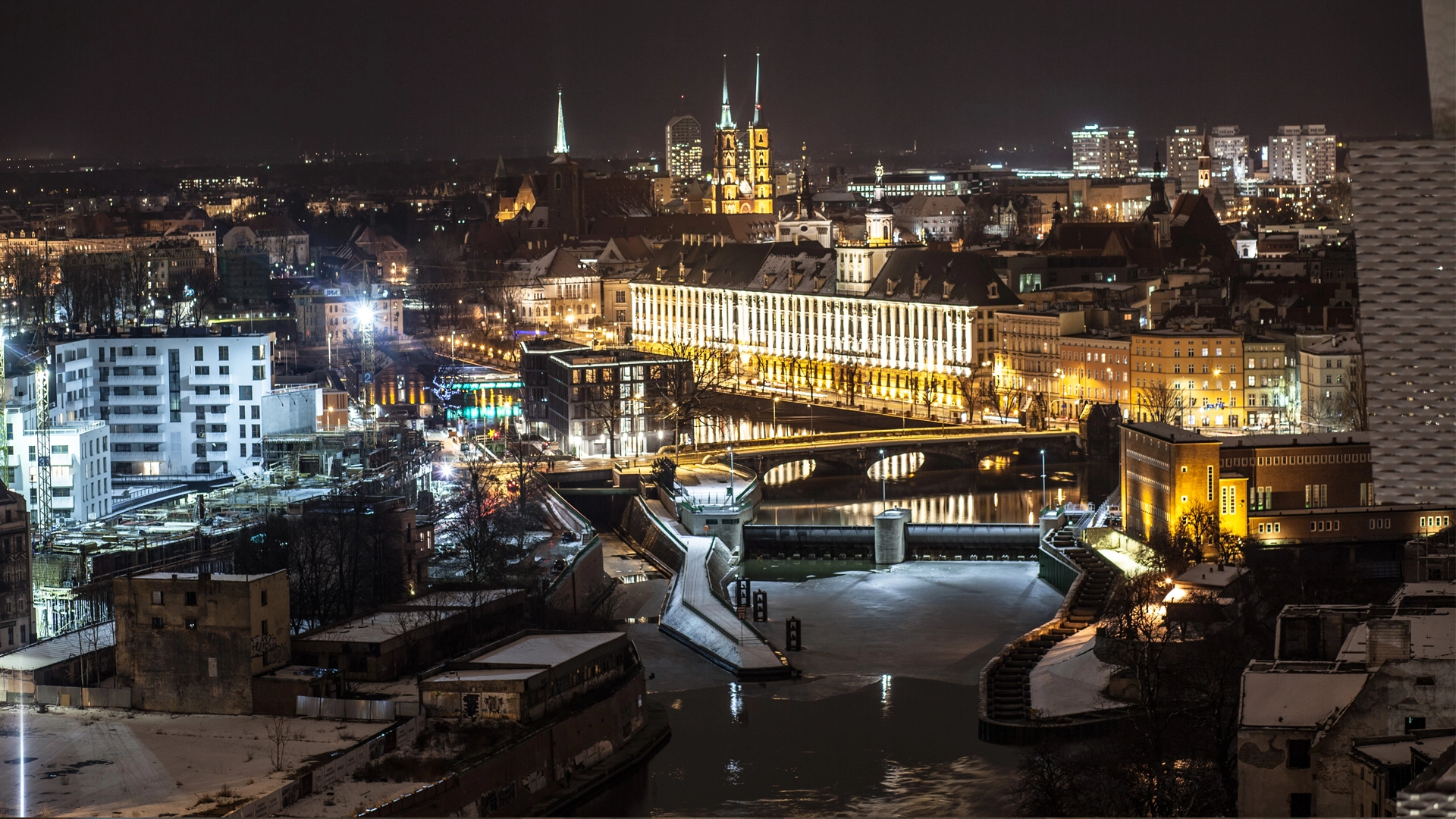
Poland's real estate market has undergone deep change over the past two decades. In 2010, apartments in the largest cities were relatively cheap compared with Western European prices, and the rental market was only beginning to professionalise. Today Warsaw, Wrocław, Kraków, Gdańsk, Poznań and Łódź have well-developed development markets, an active private rental sector, a growing PRS segment, steadily improving architectural standards and an increasing number of foreign buyers.
The rise in apartment prices was strong but had rational foundations: rising incomes, migration to large cities, the growth of the services sector, limited land supply in prime locations, rising construction costs and a persistent housing deficit. NBP data cover a long series of apartment prices from Q3 2006 to Q4 2025. In Q4 2025, the average transaction price of new apartments on the primary market was about 16,583 PLN/m² in Warsaw and about 14,062 PLN/m² in Wrocław. It is worth emphasising that after the very dynamic years of 2021-2024, the market entered a phase of greater selectivity. Not every property rises equally. The strongest performers are good locations, functional layouts, proximity to public transport, a strong labour market and limited competing supply.
For an investor, the key takeaway is simple: Poland still offers room to build a property portfolio, but it requires more careful selection than a decade ago. In 2026 it pays to look not only at the purchase price but at real liquidity, the tenant, running costs, taxes, building standard, energy efficiency and the potential to add value. Income-producing property in Poland can still be attractive, especially for investors from markets where entry prices are much higher and yields lower.

4. Who buys property in Poland, and the scale of the business-services sector
Foreign demand for Polish property is increasingly visible, but it needs to be described precisely. According to Polish Interior Ministry data for 2025, foreigners bought more than 17,700 apartments in Poland, slightly more than a year earlier. The largest group of buyers were citizens of Ukraine, who purchased around 9,300 apartments. The second-largest group were Belarusians, with more than 2,700 apartments. Significant buyers also include Germans and citizens of India, Turkey, the Czech Republic, Italy, France, the United Kingdom and the Netherlands. Some purchases are investment-driven, but increasingly they are also life decisions: work, children's education, long-term residence and tying one's future to Poland.
It is worth adding that EU citizens benefit from easier rules for acquiring property than citizens of many non-EEA countries. In practice, the apartment market in the largest cities is accessible to many foreign buyers, although land, agricultural or forest properties, or locations in the border zone, may involve additional administrative requirements. This is another reason why foreign investors should use local legal, tax and transaction advisory.
A separate and very important theme is the BPO, SSC, GBS, IT and R&D sector. Public reports do not always provide a single simple figure for "BPO investment", so it is more honest to look at the scale of the sector through export value, the number of centres, employment and new projects. According to ABSL, the business-services sector in Poland accounted for around 5.7% of GDP in 2025, employed 488,700 people in service centres at the end of Q1 2025, and generated business-services exports worth USD 42.3 billion in 2024. Between January 2024 and the end of March 2025, 61 new service centres were launched, mainly in IT and R&D.
This has direct implications for real estate. The business-services sector generates demand for offices, rental apartments, retail premises, homes for management staff and investment in academic cities. Kraków, Warsaw, Wrocław, the Tricity, Katowice, Poznań and Łódź benefit particularly strongly. An investor analysing real estate in Poland 2026 should look precisely at these links: where jobs are created, where the number of well-paid specialists is rising, where universities supply talent, and where urban infrastructure improves quality of life.
Investment takeaway: In 2026, Poland is not a market of easy bargains in the simple "buy low, sell high" sense. It is a selective but still attractive market. The best results come from investing in good locations, property with real income, assets that can be professionally managed, and projects tied to the long-term growth of major cities. For investors from the US and Western Europe, Poland still offers an interesting balance of entry price, asset quality and growth potential.
That is why real estate in Poland 2026 is best treated as a long-term strategy. Poland has already completed a huge stage of transformation, but it has not finished the process of catching up with Europe's wealthiest countries. Its advantages are the combination of scale, a central-European location, EU membership, a skilled workforce, a growing services sector and a property market that is still developing. A well-chosen property in Poland can be not only a safe tangible asset but also part of a portfolio that benefits from further economic growth, urbanisation and inflows of international capital.
Investing in Poland? Let's talk.
Looking for income-producing property in Poland, or planning to build a rental portfolio? We help with selection, analysis and the entire transaction — including remotely, for clients based abroad (PL/EN).
Contact an advisorPublic data sources
- World Bank Data – Poland GDP and GDP per capita (PPP): data.worldbank.org/country/poland
- European Commission – Economic forecast for Poland: economy-finance.ec.europa.eu
- IMF – Republic of Poland country page: imf.org/en/Countries/POL
- NBP – House price database (quarterly reports), Q3 2006 – Q4 2025: nbp.pl/en/economy/real-estate-market
- ABSL – Business Services Sector in Poland 2025: absl.pl/en/publications
- Polish Ministry of the Interior and Administration – annual reports on the acquisition of real estate by foreigners (2025 data).